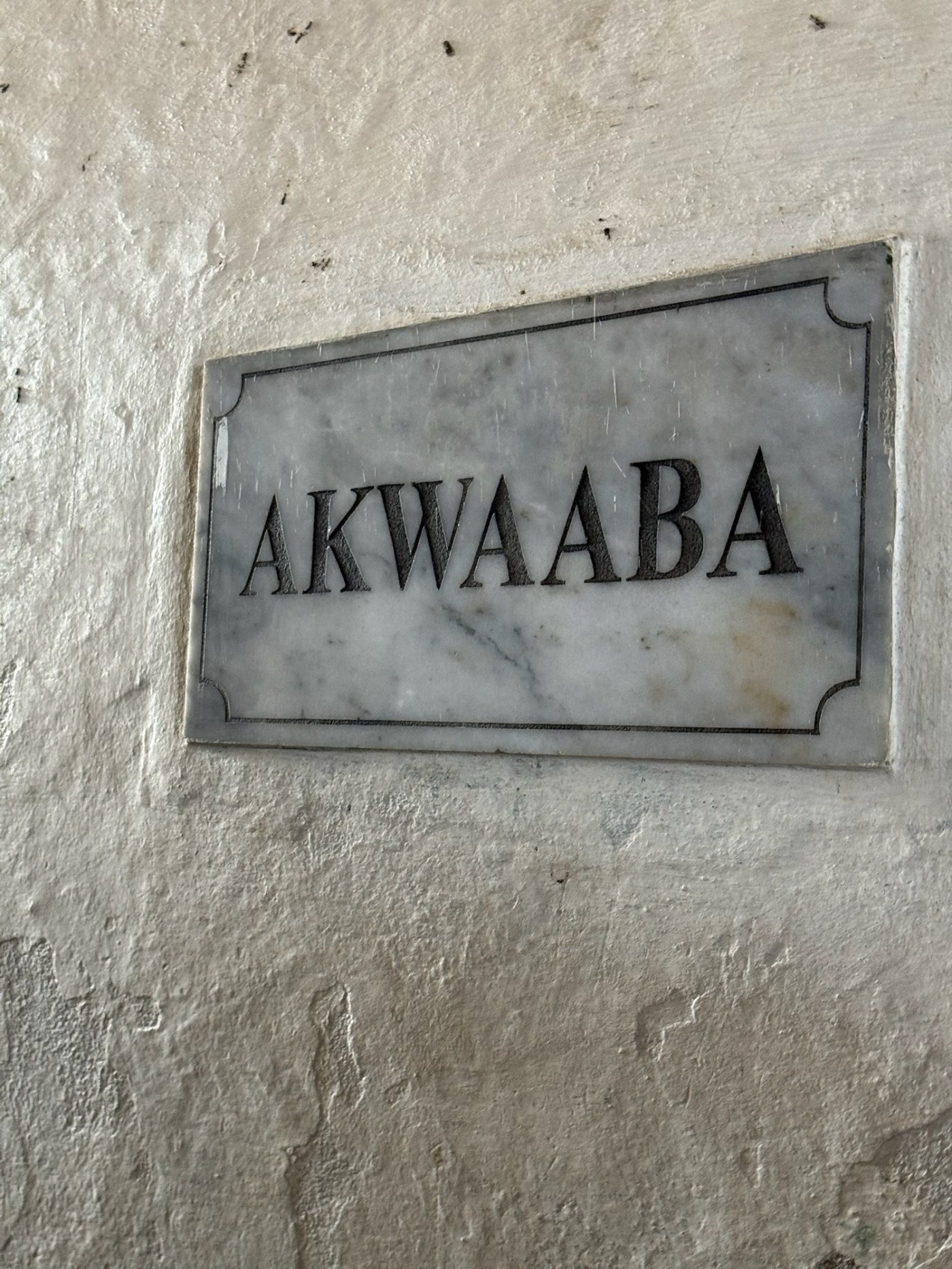
Day 1: Arrival – Tell the ancestors we’re back
Time and distance are relative.
After what felt like a never-ending journey across thousands of miles, my dad and I finally landed in Accra. Tradition says you have to let the ancestors and elders know you’ve arrived—or else it doesn’t really count. So we met our guide at the airport and jumped straight into another journey: hours by car to Cape Coast, where we would honor the ancestors at the slave dungeons.
For context: Ethiopian Airlines took us 13 hours and 45 minutes from Chicago to Addis Ababa, then another five hours and 51 minutes from Addis Ababa to Accra. What was supposed to be a “40-minute layover” was gone the second you factor in landing, security, and transfer. We reached the gate with ten minutes to spare.
And still, the road stretched ahead. The three-to-four-hour drive to Cape Coast was longer thanks to construction. Picture one lane each way, red clay dust hanging in the air, vendors lined along the road, people carrying goods balanced on their heads.


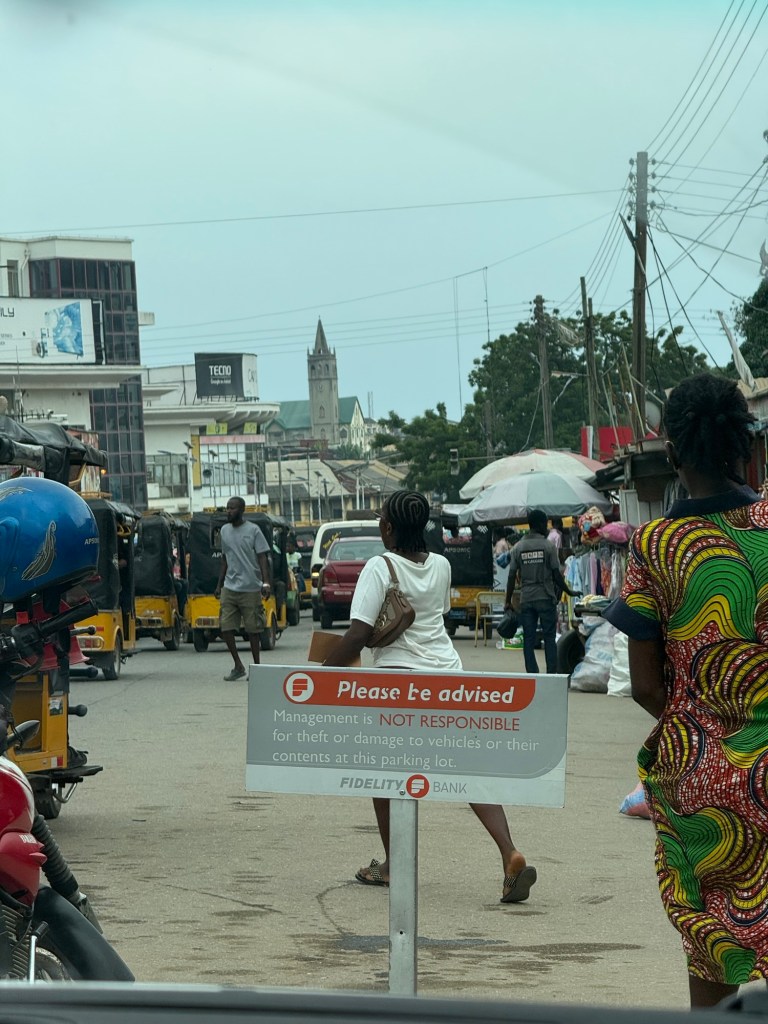
Cape Coast itself is full of life, but not the kind I expected. It doesn’t have the urban buzz of a city or the calm of a beach town. The road to our hotel was a jumble of people, animals, and vehicles moving in every direction at once.
This was a birthday trip for my dad. On our first night, just before midnight, we went to Cape Coast Castle for a candlelight ceremony. We poured libations, received blessings from the elders, dipped our feet in blessed water, entered the Door of Return, and retraced the steps of our ancestors in reverse. That’s how my dad started his new year of life.
Day 2: Not quite the Middle Passage
The next day we toured both Elmina and Cape Coast slave dungeons—two of the main holding sites of the transatlantic slave trade.
Quick note: “castle” and “dungeon” aren’t interchangeable. The signs call them castles, but they were prisons. Which word you use depends on which side of the ocean your ancestors ended up on.
Some histories lean on African leaders’ role in capturing and selling people, as if that’s the whole story. The tours revealed more. One of the most disturbing truths: the Church’s involvement. The Portuguese had papal approval, and at Cape Coast there’s literally a church built right above the dungeons. Services went on upstairs while screams and stench rose from below.


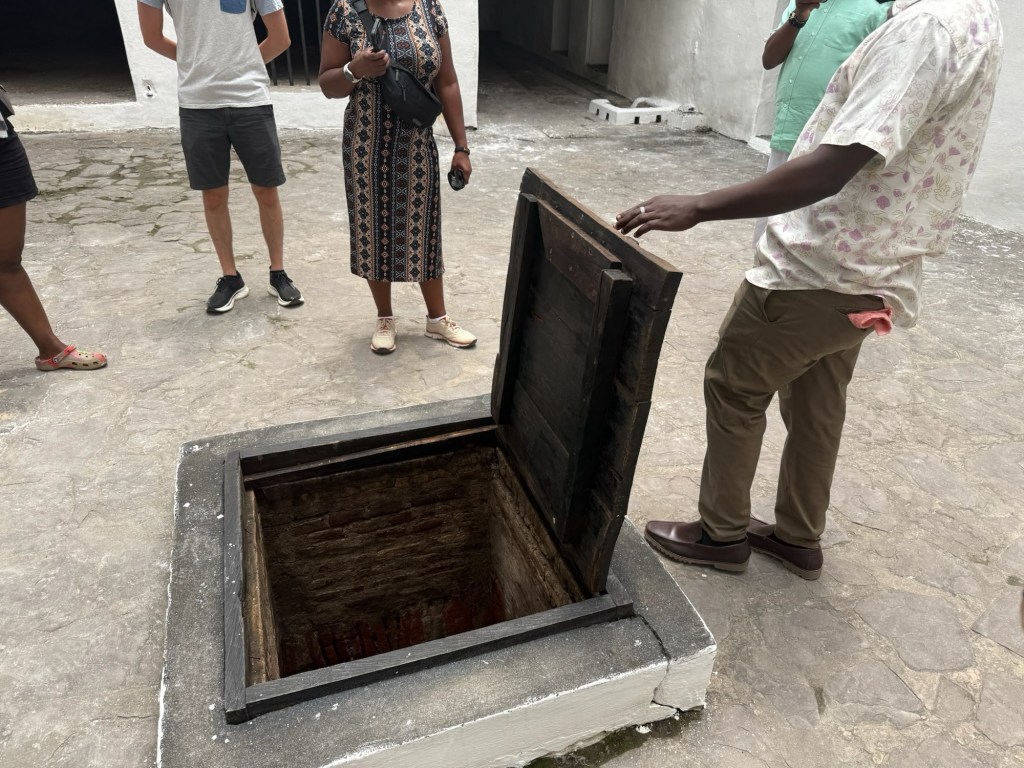
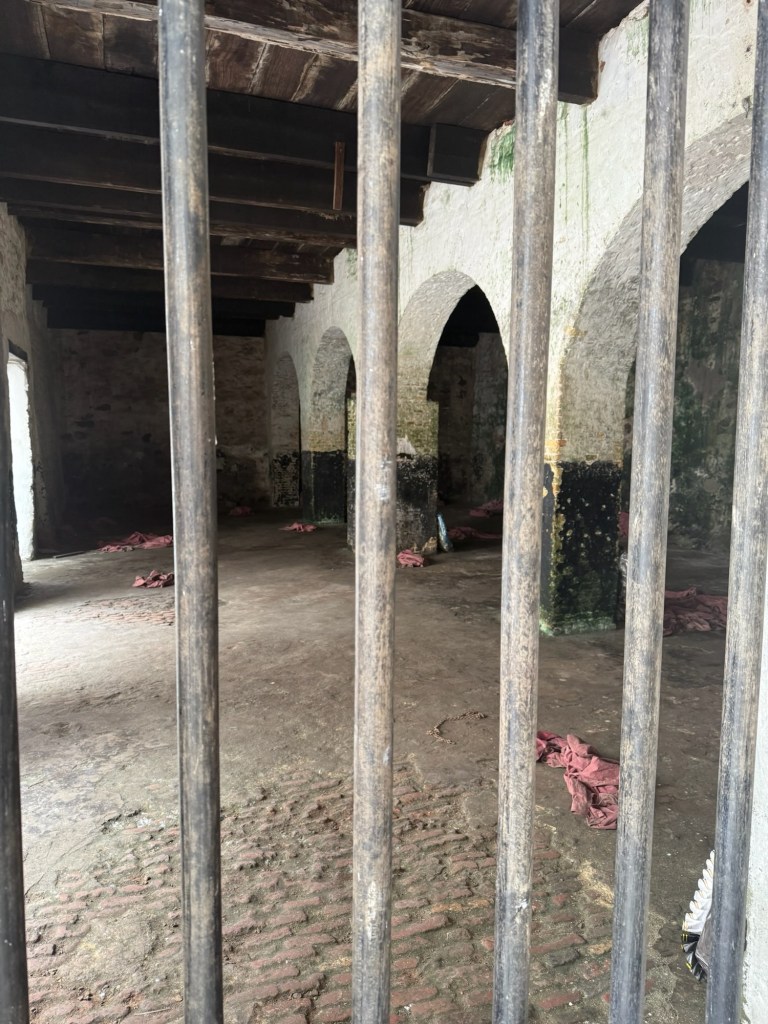
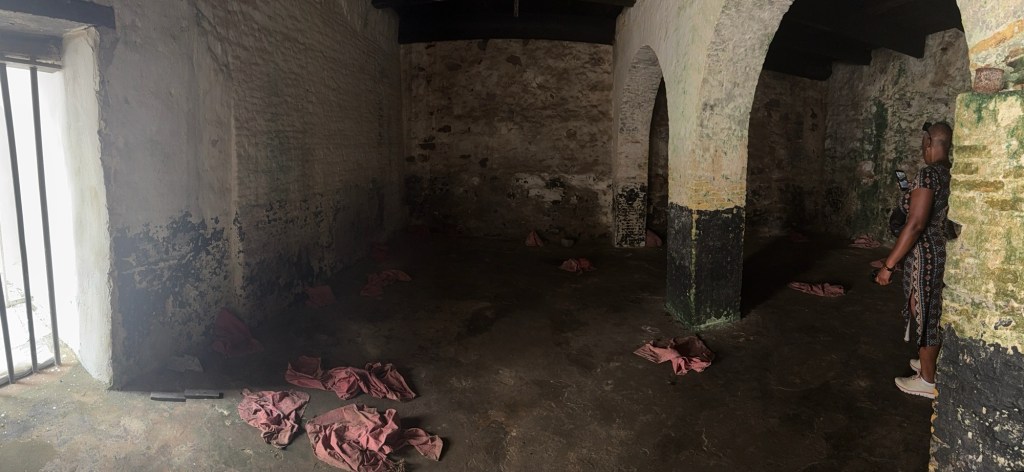
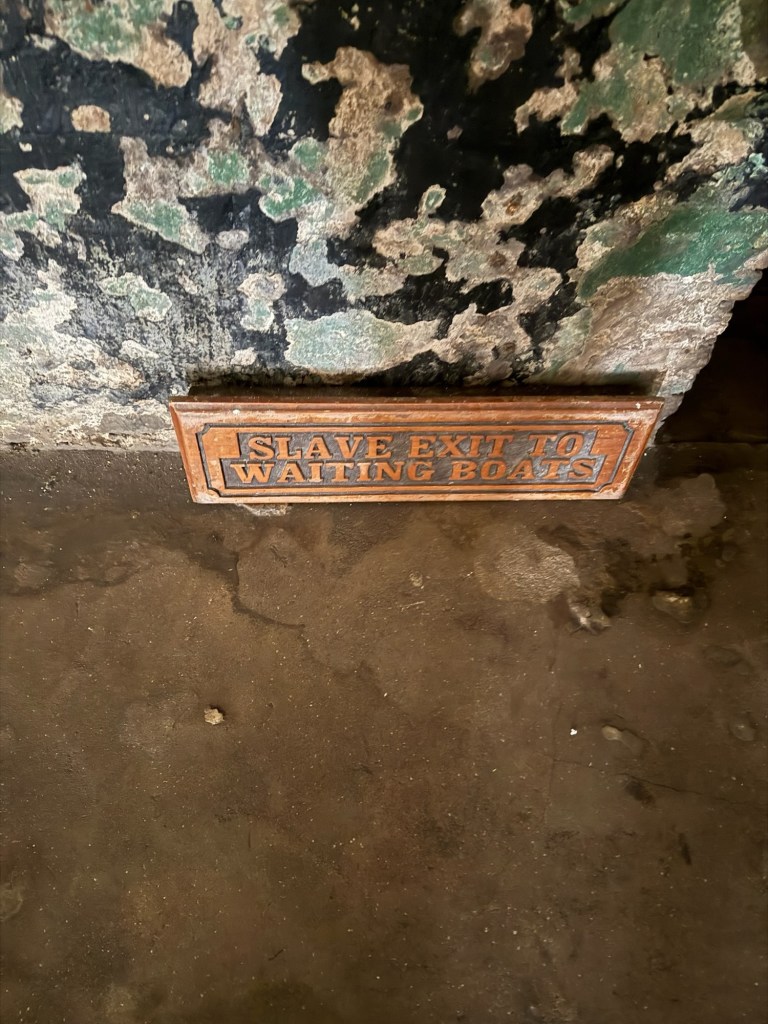
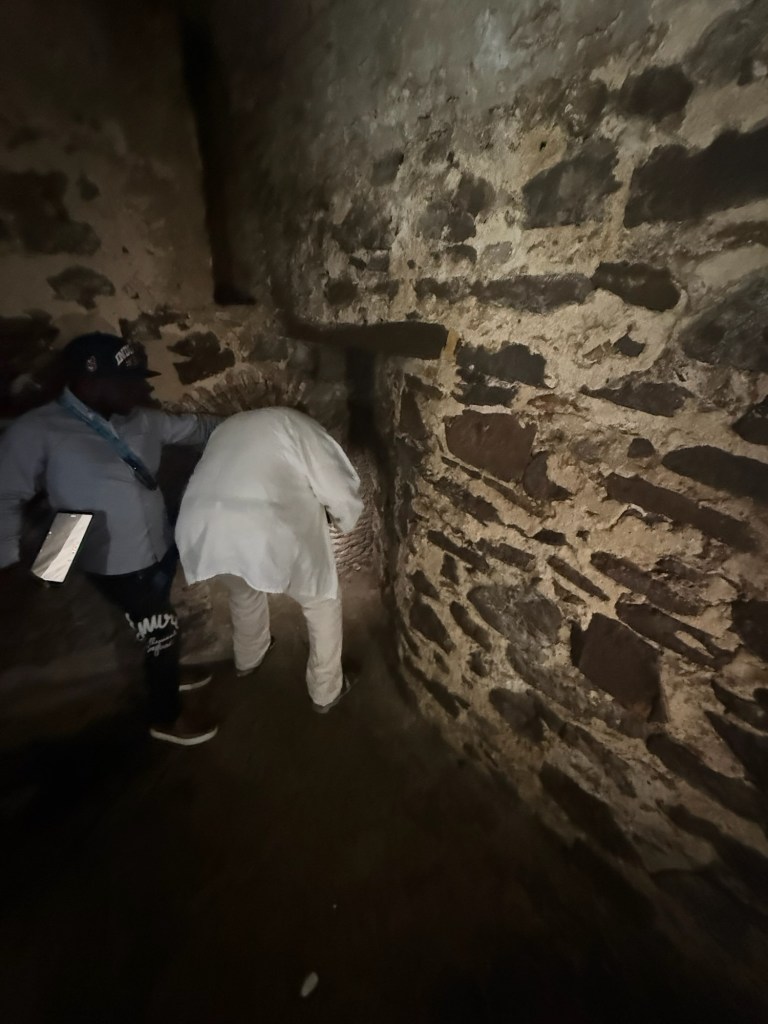

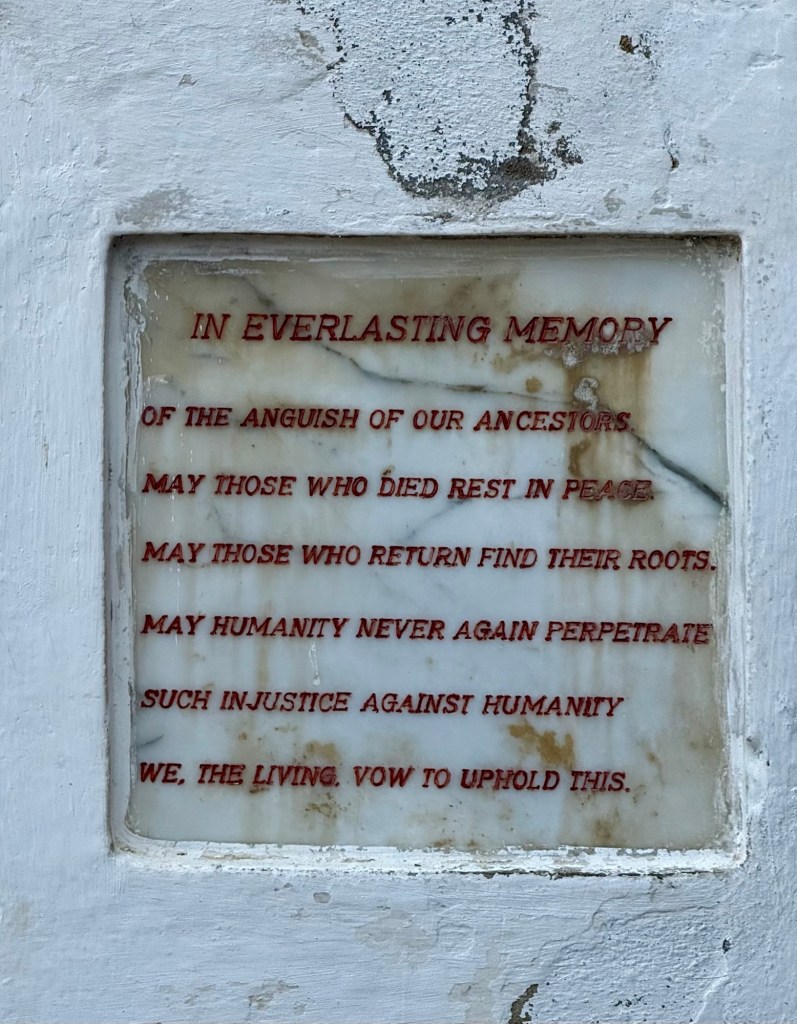


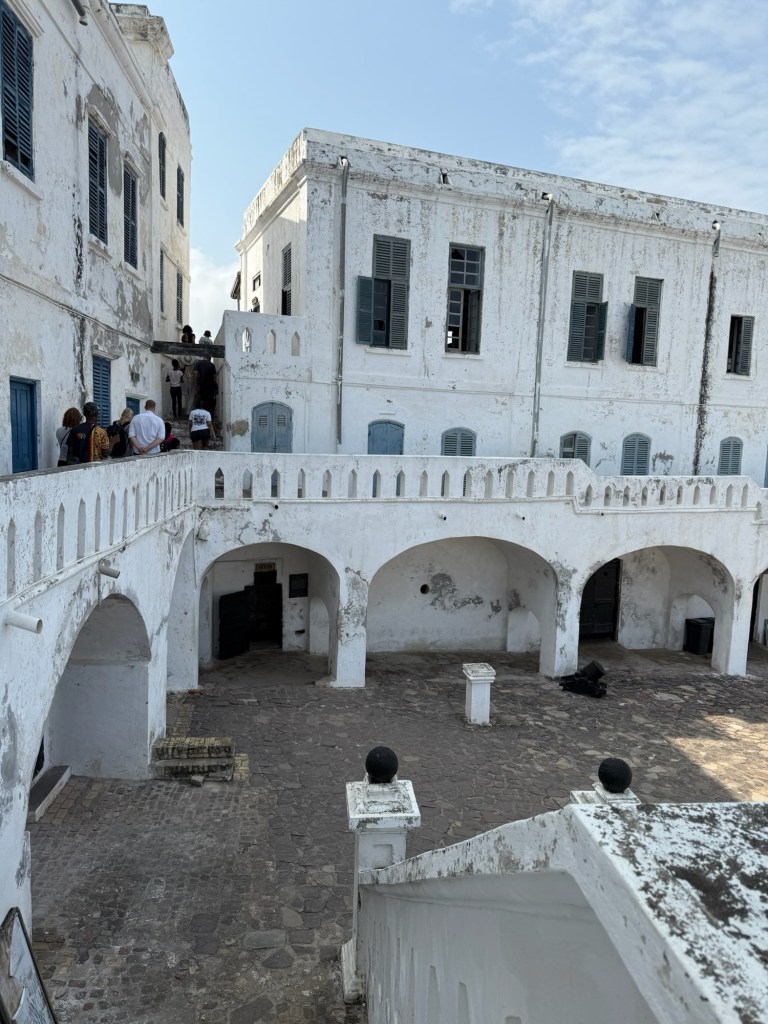
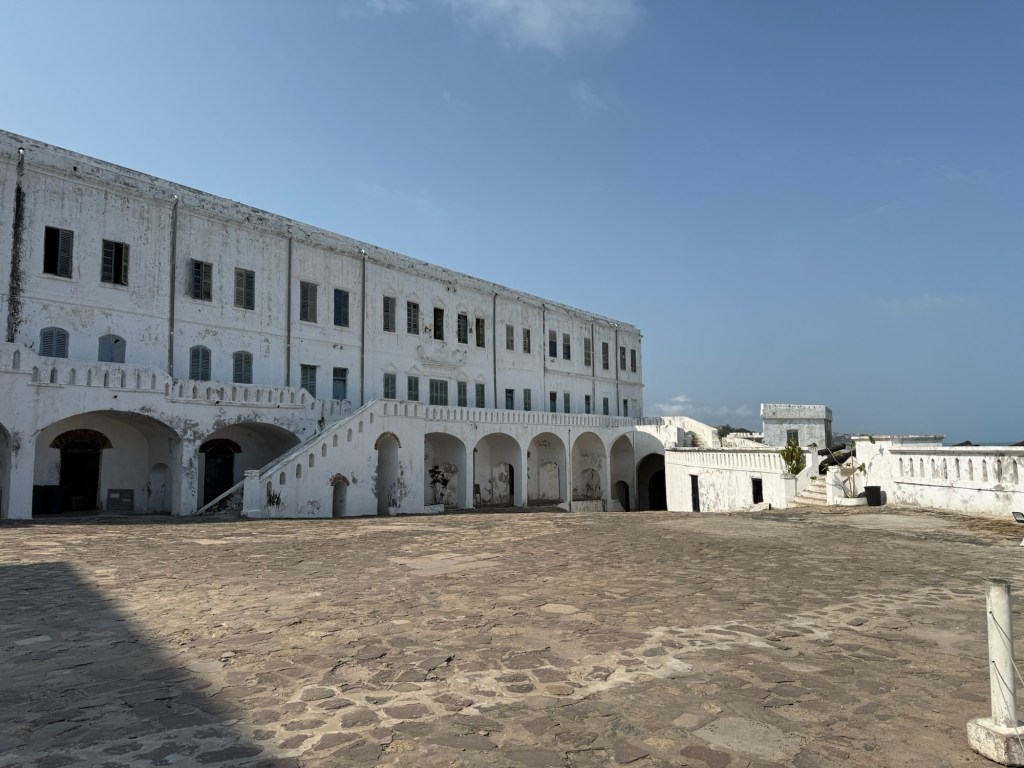
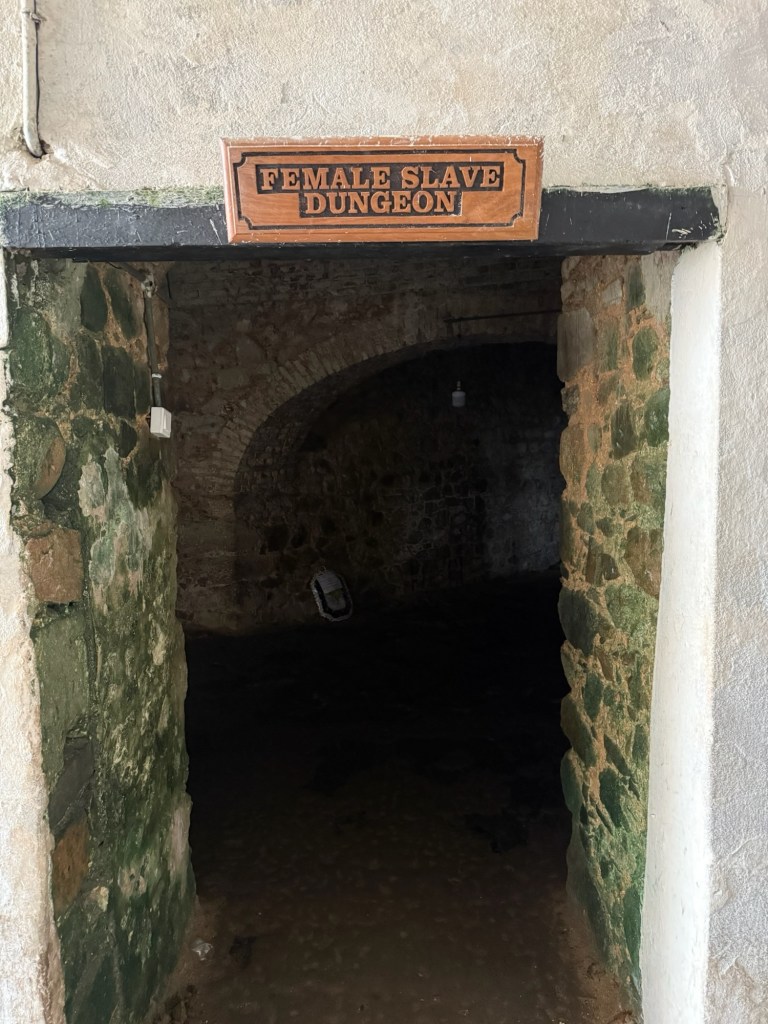
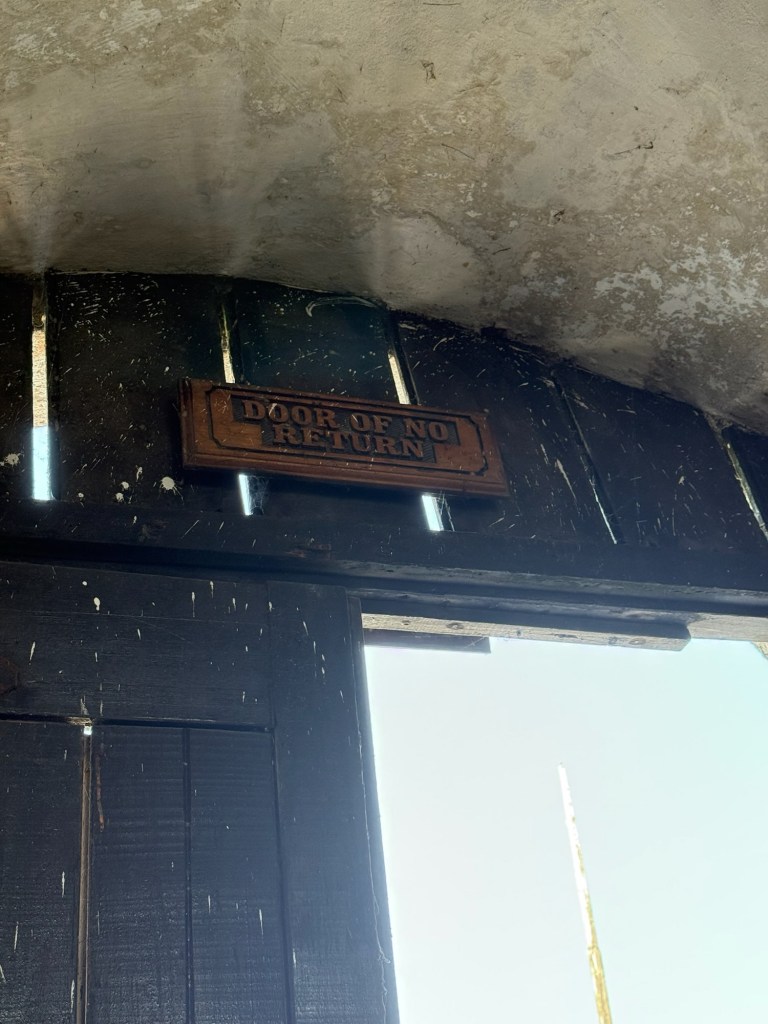
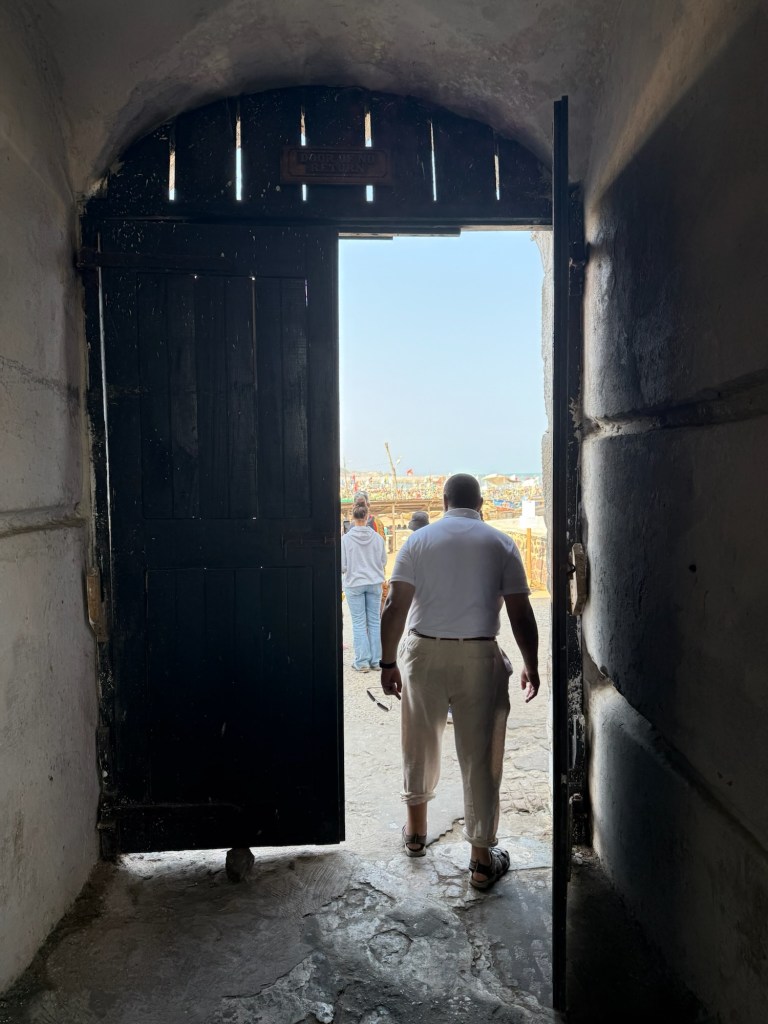
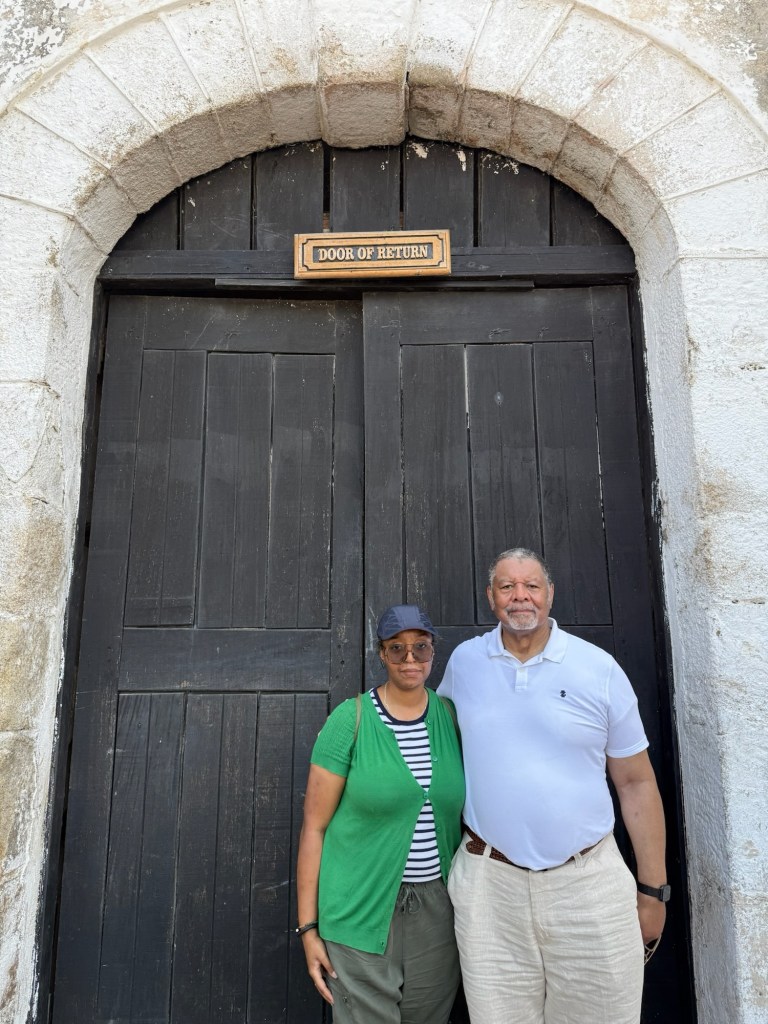

Even hearing a fraction of what happened keeps me angry. But for now, I’ll shift to the rest of the day. Like the canoe ride. Ever pictured one—in the ocean? I hadn’t. When it was first suggested, I thought gondolas in Venice, not a wooden boat on the Atlantic. They handed me a life vest, but I still didn’t process what was about to happen. Watching waves slam the shore that morning should’ve been my clue.
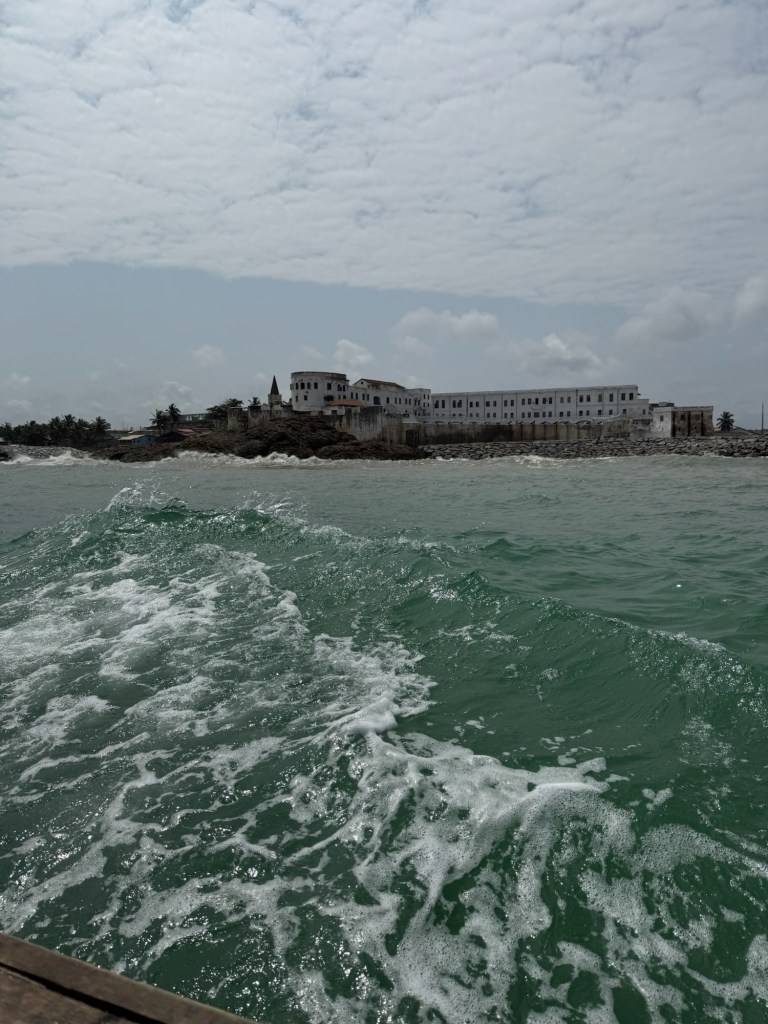
Yet we left St. George’s Castle in Elmina, climbed into a canoe manned by three men, and set out for Cape Coast Castle. Those waves were very real. At one point the engine cut off, and I had a quick “what now?” moment. Steering into what felt like open ocean, I asked our guide if she was sure land was actually ahead. She pointed to the horizon: “That white building down there.” I couldn’t even see it.




Day 3: Allow me to reintroduce myself
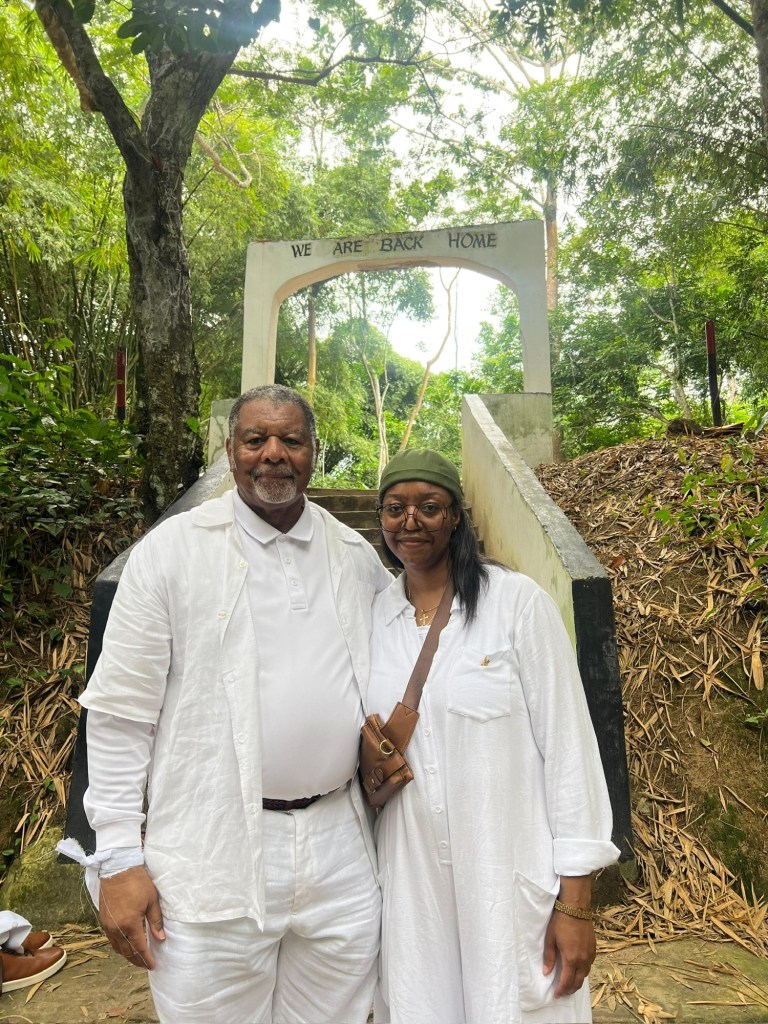
This day was about rebirth. We went into Cape Coast for a naming ceremony and a visit to Assin Manso Garden of Remembrance.
Allow me to reintroduce myself: my name is Nana Yaa Asantewaa, after the Ashanti queen who led the 1900 war of independence against the British Empire.
The Garden of Remembrance is home to the river where enslaved Africans were forced to take their “last bath” before marching 25 miles to the dungeons. As part of our visit, we walked down to that river and took the “First Bath of Return”—a ritual of cleansing, remembrance, and renewal. That was our final day in Cape Coast.


Day 4: Back to the City
The drive back to Accra felt longer than the trip out—probably because I was awake for more of it. Construction didn’t help. At one point we needed a pit stop. Finding a gas station was hard enough; finding one with a restroom even harder. When we did, it looked more like an outhouse than a bathroom.
I thought I wanted city energy over the coast. I was wrong. Accra was just as chaotic, maybe worse.
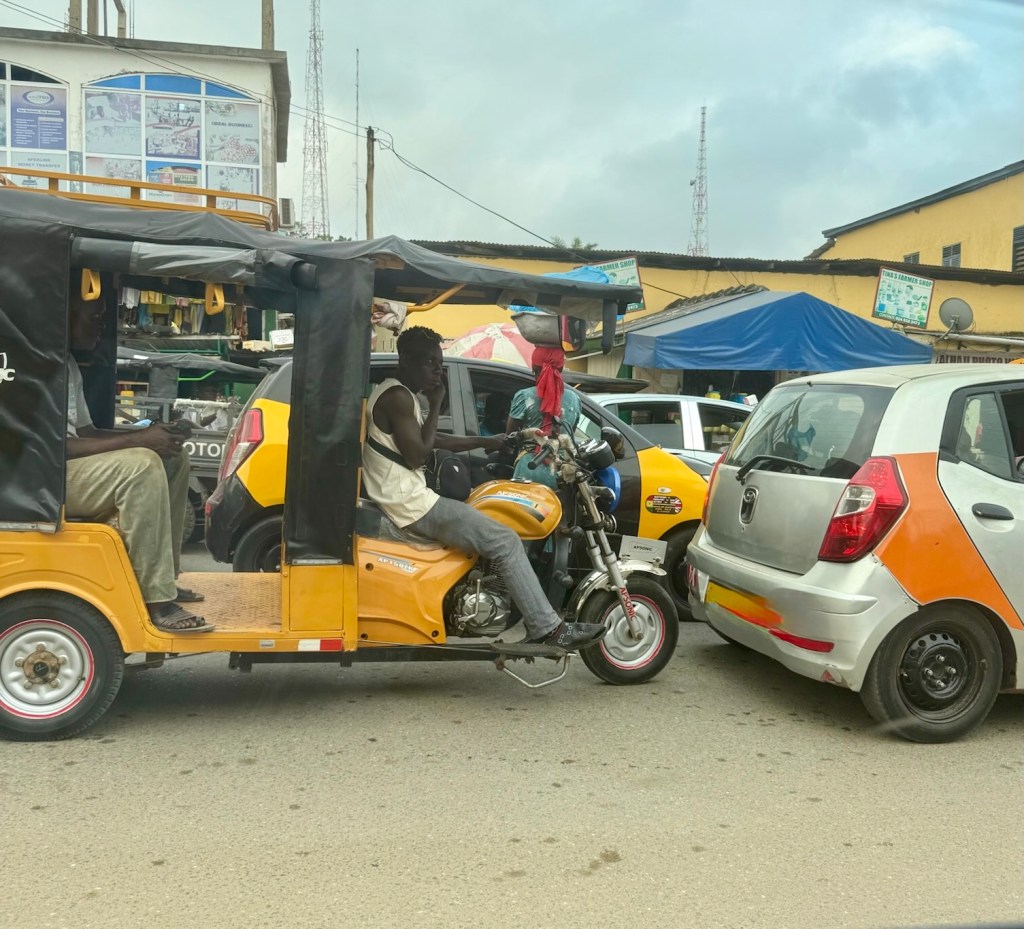
Traffic is another level. Motorbikes follow no rules. Vendors were everywhere, balancing baskets and boxes on their heads, selling anything you could imagine. Around tourist spots, there was the constant push for “donations” in exchange for art, bracelets, or souvenirs. At one point we drove through what looked like a quiet residential area—on one side, a herd of cattle waiting to cross; on the other, rows of parked vans and trucks.
Whenever I travel, I ask myself if I could live there. Accra wasn’t what I’m used to. Not fully urban, not suburban, not rural—some mix of it all, and maybe too much for me. A couple days aren’t enough to make a final judgment, but I wasn’t jolted into an “I could live here” mindset.

Day 5: Rest
Day 6: Liberation and Freedom
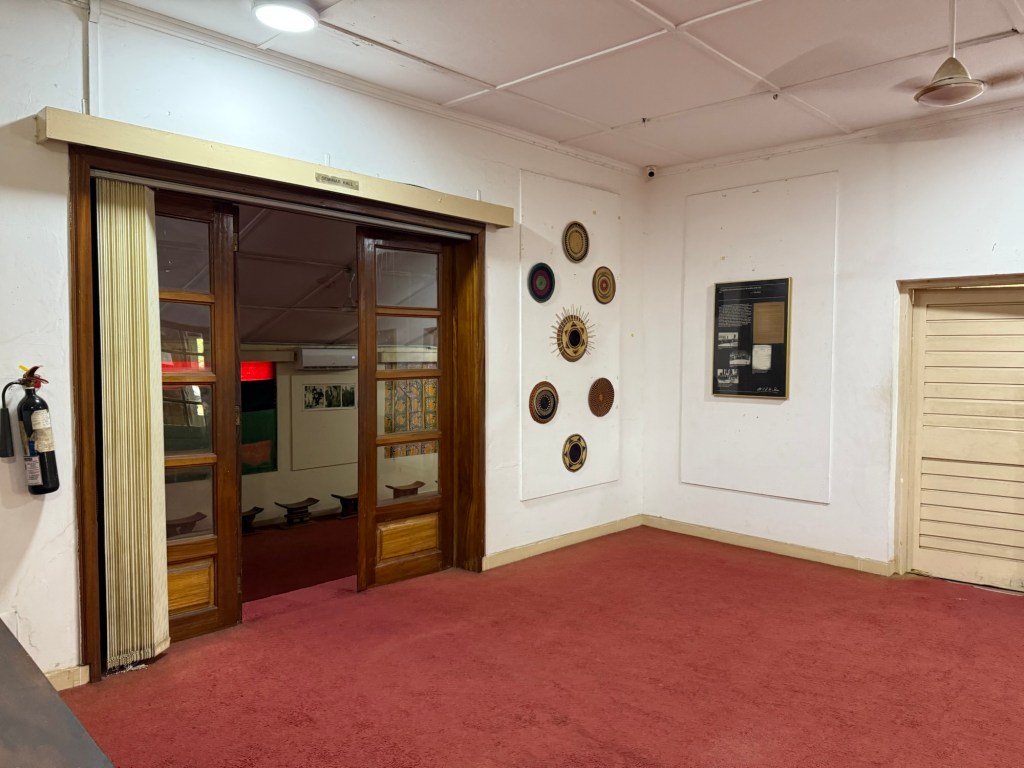
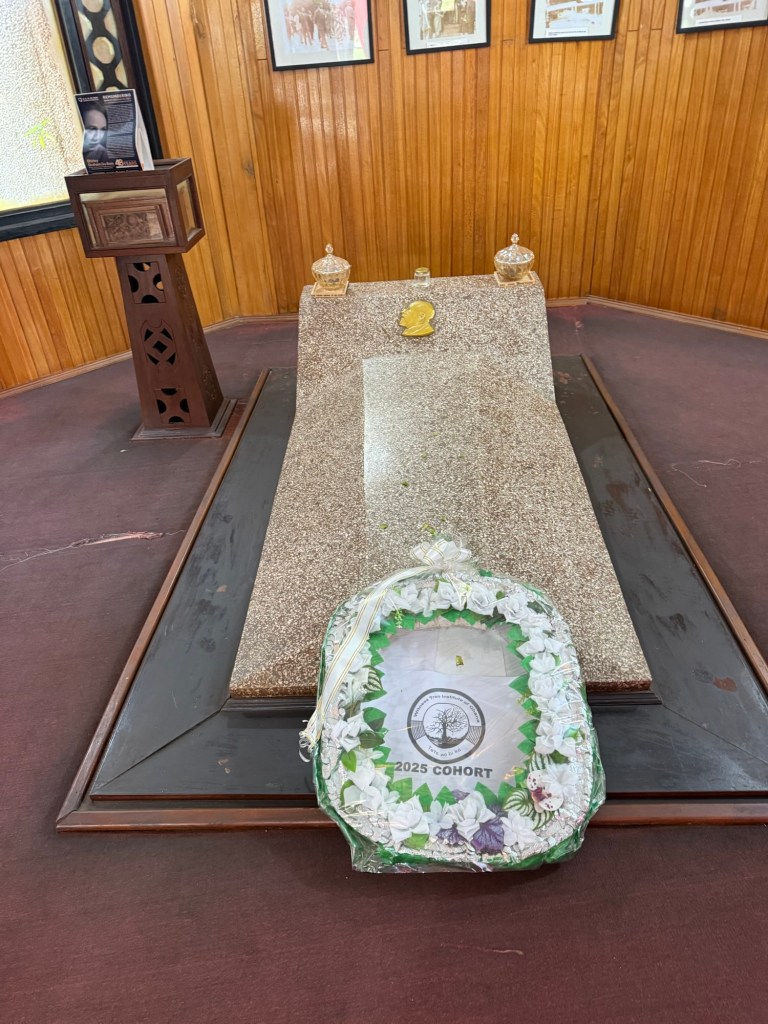
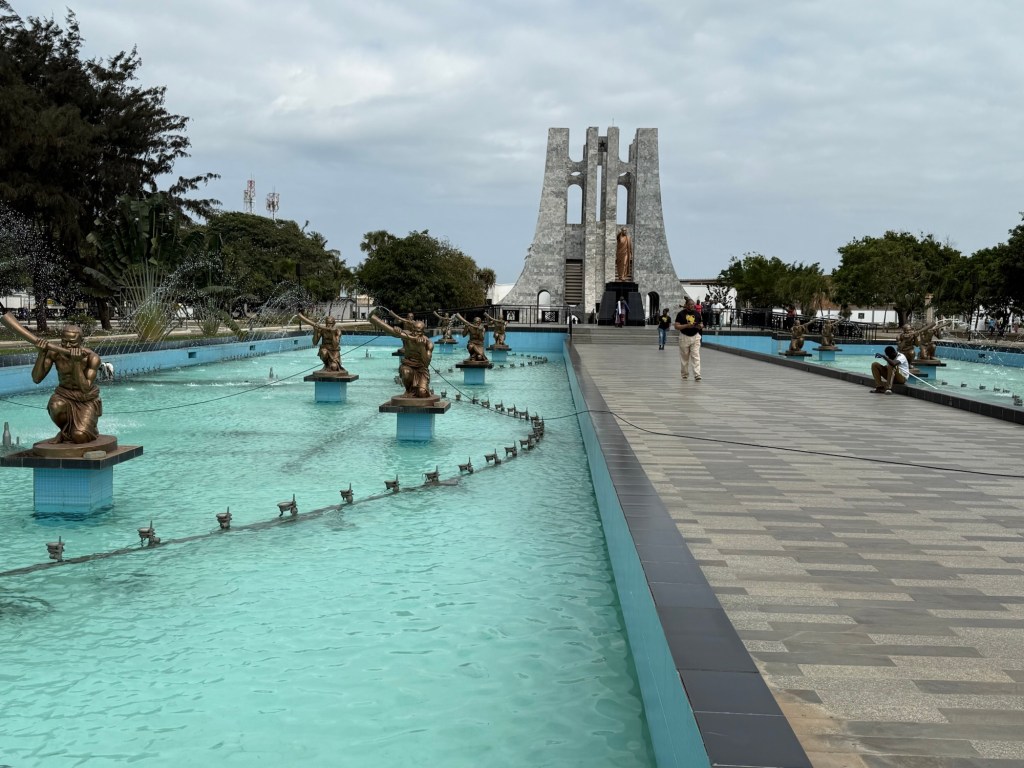
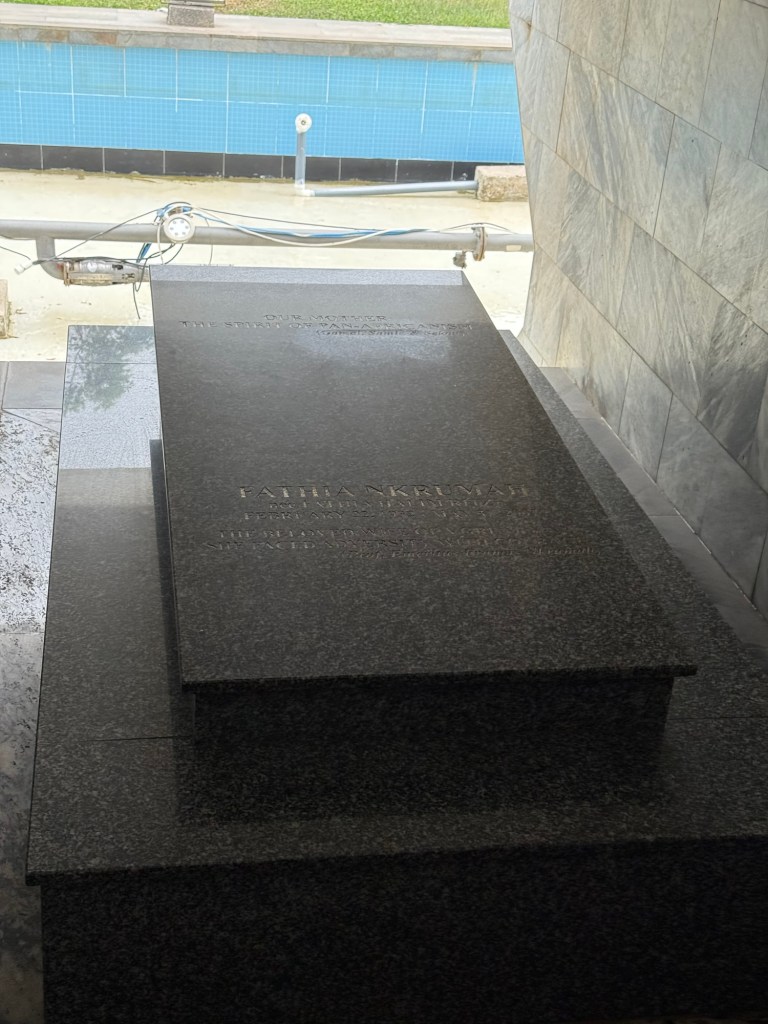
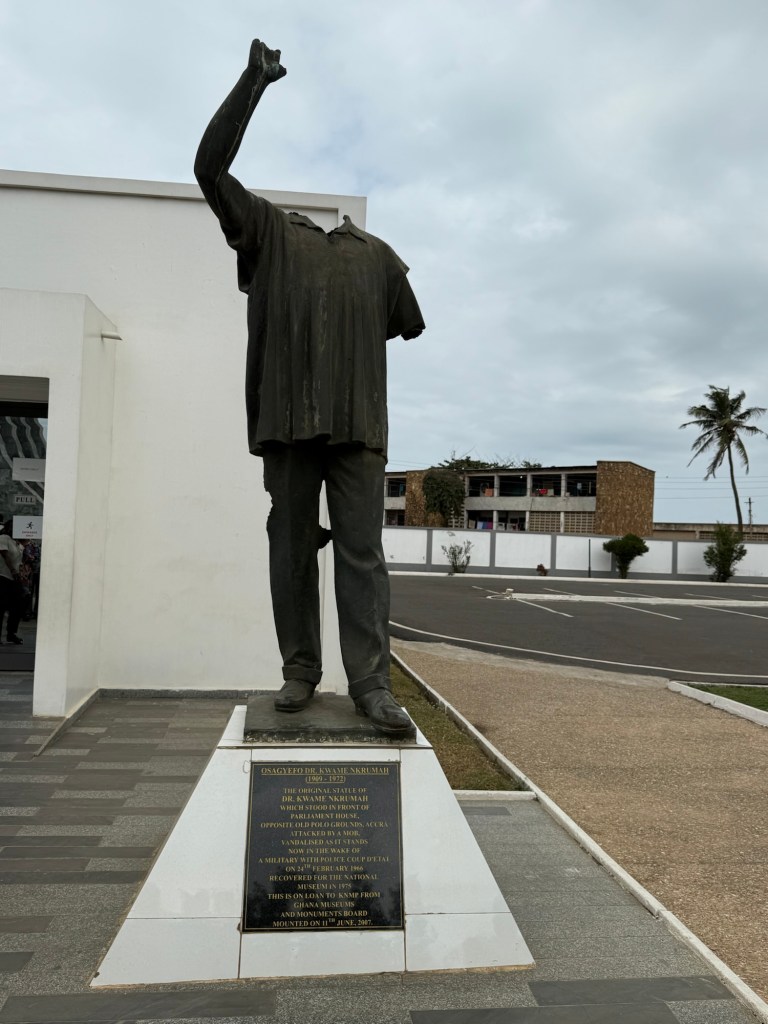
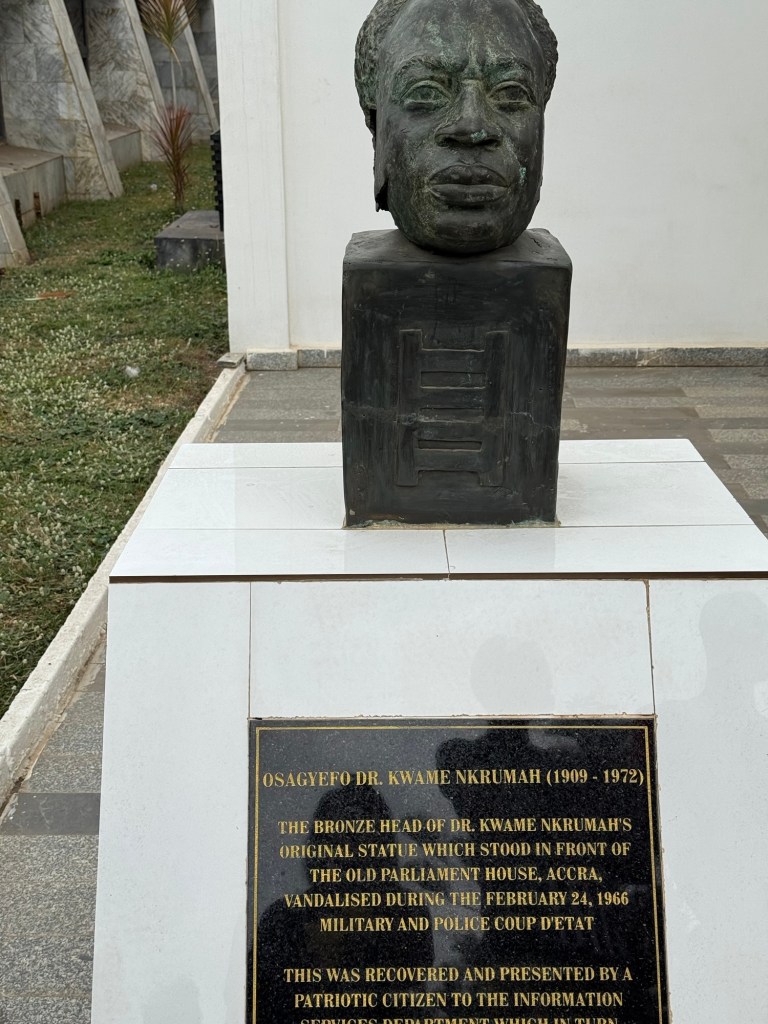
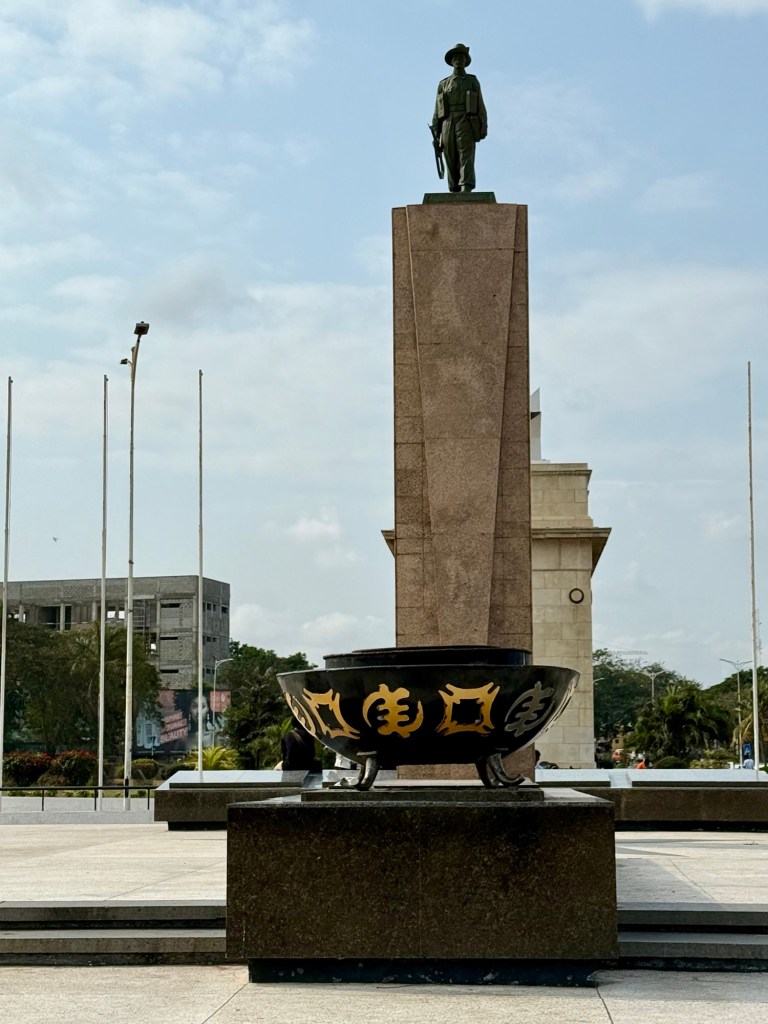
We spent this day visiting sites dedicated to Pan-Africanism and independence: the W. E. B. Du Bois Center, Diaspora African Forum, Kwame Nkrumah Memorial Park, Independence Square, and the Black Star Gate. We wrapped up with shopping at the Cultural Arts and Crafts Center.
To be honest, my expectations for the Du Bois Center were different. I pictured something closer to the King Center in Atlanta, or at least the level of Nkrumah’s memorial. The information was strong, but the aesthetic wasn’t what I had in mind. Maybe the planned 2028 renovation will bridge that gap. Still, both sites added depth and context to this return to the Gold Coast.










Day 7: More Than Markets and Malls
Who goes to the Gold Coast and doesn’t buy gold? Prices weren’t what I expected. Given the name, I assumed affordability. History—and modern economics—proved me wrong. Let’s just say the name “Gold Coast” doesn’t line up with today’s costs.
I also asked to visit a shopping mall—not just for purchases, but to see what one looked like here. After the energy of the markets, I wanted to experience a different side of Accra’s commercial life, something less chaotic.
This journey was layered—enlightening, chaotic, and grounding all at once. Walking through dungeons, riding across the ocean, taking a new name, and standing where freedom was declared. Each day forced me to look at history and the present in the same frame. Ghana wasn’t just a destination. It was a reckoning, a reminder, and a return.
My father views Ghana with slightly different eyes. He sees great possibilities for development in numerous areas. The Pan-African movement advocated by DuBois and Nkrumah may yet be realized. The Ghanaians realize that China and other nations seek to exploit the vast resources of the African continent and so the Ghanians are urging the other nations on the continent to come together to avoid a repeat of the exploitation of the new neocolonialists.


Wow, wow, wow. Thank you for sharing. Safe travels home.
LikeLike
looks like it was a wonderful trip. Deborah
LikeLike
love this, felt like I was there. Thanks for sharing the history and the pictures. You have gain sa new follower. You have a writing great. Be blessed.
LikeLike